
Author- Sarpreet Kaur
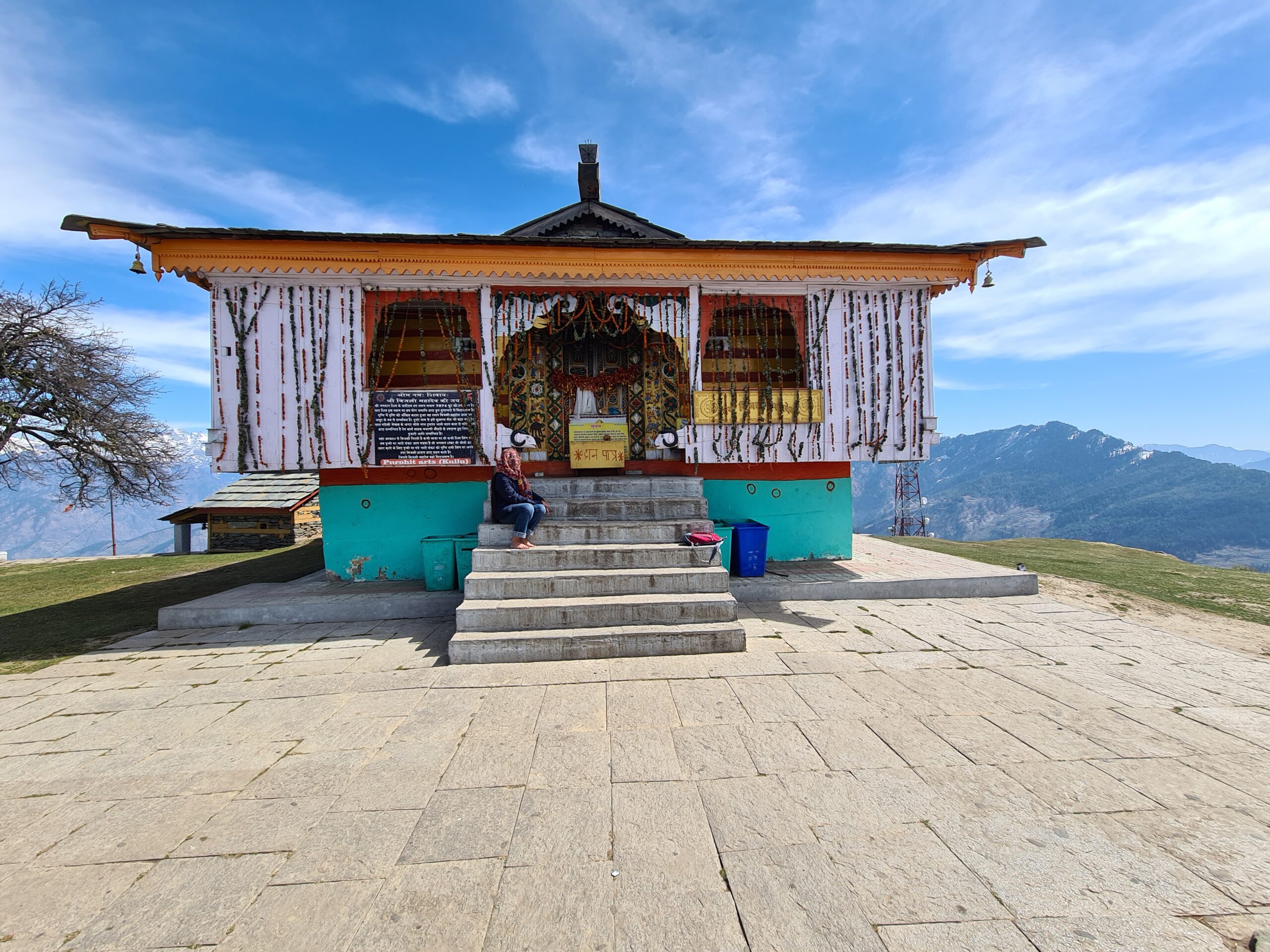
With lush green Parvati Valley on the ridge face and the valley of gods, Kullu on the right, I stood on the majestic peak of Mathan hill, an eternal witness to the confluence of playfully meandering Beas and Parvati rivers. I sighed with elation at the sight of grandiose before me, my inner clamouring paused at last, even if for a while. A dog, my new furry companion, grazed my leg and prodded me to sit on the loamy ground. Earthy brown surface with a touch of weathered green embellished with sleek yellow flowers of Barf Basanti. I basked in the sun with gratitude, and my ego mellowed amidst the sophisticated mammoth-ness of nature. Burden of deadlines, ambition, passion; unknowingly shed along the trek, my shoulders felt light. A celestial rhythm from the ancient temple wafted through the air like a wisp of smoke, nudging me to be kind, to be kind to myself. Here I was, sitting beside the Bijli Mahadev temple, a sublime shrine with lofty legends to its name and alluring tales. Amidst the songs of rustling pines, whispering deodars, and Dhauladhar and Pir Panjal ranges as witnesses, I reverentially bowed before the benevolent Lord Shiva.

Starting from the start, the journey began from the land of rivers, Punjab. We glided on sprawling highways cutting through meticulously prepared rectangular blocks of green and gold. Soon, Dev Bhoomi Himachal appeared, and the masculine wideness of the road gave way to feminine curves slithering across the wise mountains. Cruising through picturesque landscapes, bustling bazaars, and well-lit tunnels, hearts softened, and the soul stuck under the debris of mind’s chaos peeked through the emerging gap. Finally, the Kullu valley welcomed us alongside the gushing Beas.
After witnessing the nighttime tranquillity of twinkling mountains, a belly full of Siddu; a local walnut and ghee-drenched delicacy, and a night walk in expansive Dussehra grounds, we slept under the lull of the mountain breeze. In the morning, the hustle and bustle of the Kullu bus stand awaits. Cradled in the cacophony of hollering conductors, a small Bus’s engine revs. It is one of the few buses that take you to the starting point of the trek. Leaving the Mandi-Manali highway to its right, the bus zig-zagged on a narrow road adorned by clusters of houses, apple trees, and mini pomegranate orchards on steep, sturdy slopes. Mystical music roared through the bus while you looked out at the panoramic view of the valley. As if nature itself wasn’t beautiful enough, here people are a sight to sore eyes. Sturdy moustached men with green Kullu caps, timeless beauties adorned in elegantly draped shawls tucked with a silver brooch called boomini, and accented by head scarves called dhatu.


Tiled Path through Village Chansari
The trek is a culmination of wide stone-carved steps with patches of a criss-cross tiled path. The bus drops you at the new starting point of the trek, where the village habitation ends, and a boulevard of randomly clustered trees of the Kandi forest awaits you. The old route, a little down, used to take you through the village, giving you glimpses of slanted roofs built on rectangular plank walls and layered hand-fitted stone foundations, wise nodding cows, smiling kids, village kiosks, and all this while the valley tags along smiling, seeing you huff and puff your way up.
The music of cooing birds, crackling bushes, giggling crickets, and whistling eagles tagged along jauntily. But when a loud screech of monkeys echoes and your foot falters, a fluffy yet nimble dog becomes your guard with a promise of a few biscuits and lots of stroking and petting. This dog reminded me of the tale of how on the mountainous road to heaven, a dog became a companion of lonesome mighty Pandava, Yudhishtra, till the gates of heaven.

In the last stretch, a hilltop appears alongside a green patch dotted with yellow tents. These makeshift shops sell prasad, a few adornments, and local delicacies, such as siddu, rajma chawal, and pahadon vali maagi. A little further, and a stretch of land with a well-constructed path cutting through it leads you to the main temple. The Bijli Mahdev temple showcases Kath-Kuni architecture, an interlocked wood and stone construction without mortar. A trident, a long deodar staff, and a Nandi sculpture stand at its threshold. Legends have it that Lord Shiva saved the Kullu valley from submerging by killing many asuras with his trident. Another local saga entails that every twelve years, the lingam inside the temple is struck by lightning, breaking it into pieces. Later on, the priest rebuilds the lingam from the broken pieces using emulsion of butter, pulse flour, and cereals offered by villagers. Bijli Mahadev, a homage to the might of the mighty and a symbol of beliefs that make humans transcend beyond the daily trifles and experience something beyond.

Sitting on this hilltop, it felt like home. The furry friend with his back grazing my leg gave me the much-needed solitude, but with a firm touch to ensure that I don’t fall into the depths that come with loneliness. I prayed for the tranquility of the mountains, the grace of the soaring eagle, and the perkiness of hopping butterflies. Sitting among the flowers of barf basanti, known for healing wounds, seems to be working the magic on my broken black soul as well and she whispered.

“God take me on paths that lead home
God hold my hand and let the words pour
God make my heart of steel only a few times
God Let it be softer for most.
God, give me a piece of your heart to take along
God come along, pave the path, and let’s go home.”
Author Bio:

Sarpreet Kaur is an Indian writer whose articles and short stories have appeared in The Hindu, New Delhi Times, Cafe Dissensus, Muse India, Kitaab, Borderless Journal, and Andaman Chronicles. Shaped by a nomadic life across Punjab, Himachal Prad esh, the Andaman Islands, and now Kerala, her writing draws from India’s cultural layers, human emotions, and the quiet poetry of nature.