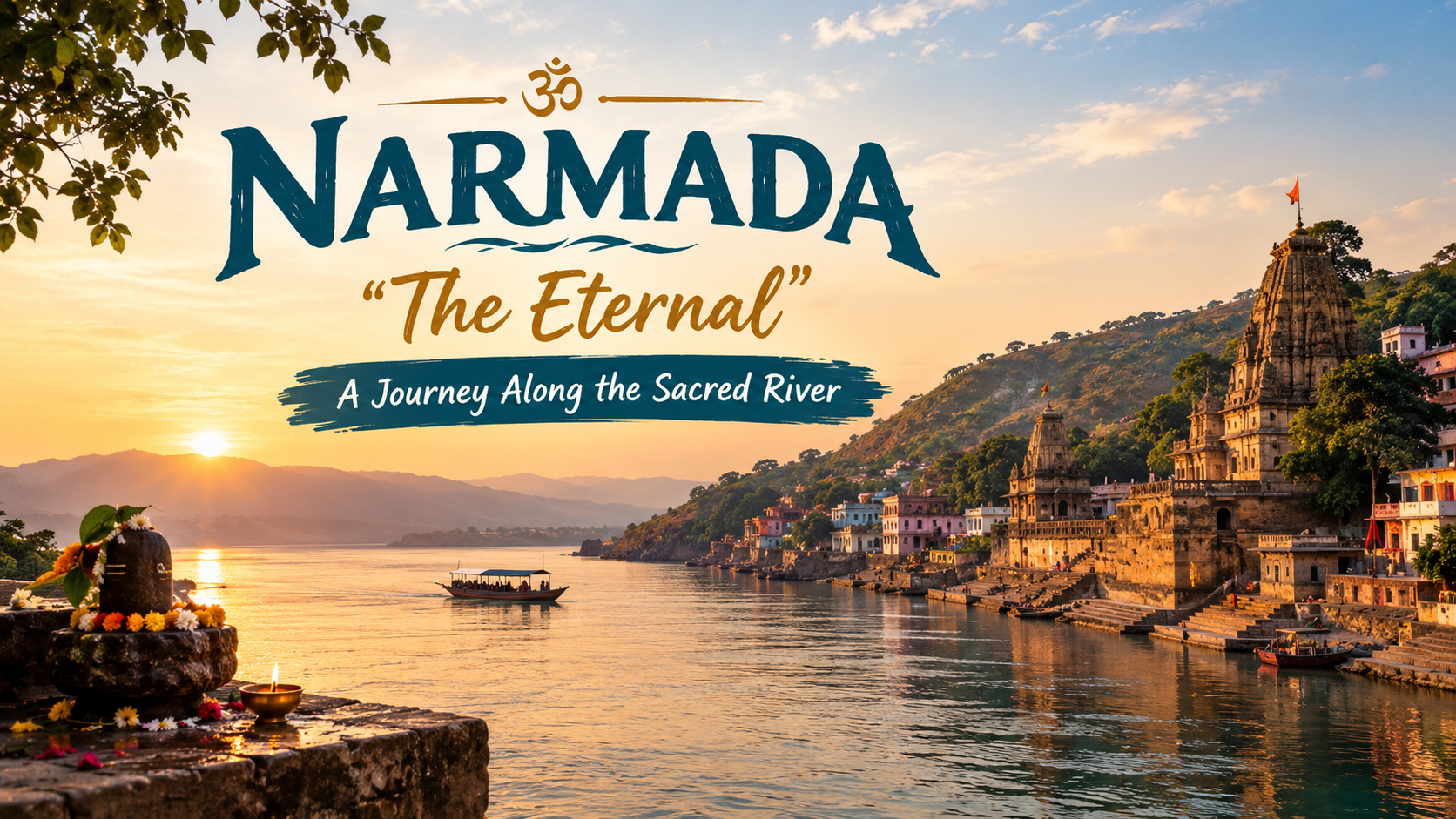

I have always wondered why the greatest civilizations in history flourished beside rivers. The Tigris and Euphrates gave birth to Mesopotamia. The Nile nurtured Egypt and the civilisations of north-eastern Africa. The Indus and the Ganges shaped the long arc of Indian history from Harappa to the Mauryas. The Yellow and Yangtze rivers cradled Chinese civilisation.
Rivers gave these societies irrigation, surplus food, fresh water, protein, trade routes, and the stability needed for centralised organisation and urban life.
Growing up in Madhya Pradesh, the Narmada was simply part of my everyday landscape. I swam in her waters countless times, crossed her bridges, and watched her flow past familiar towns. Yet I never truly paused to feel her depth, her age, her sacredness, her quiet power, until a recent visit to Maheshwar.
Standing on her banks there, something shifted. The river I had known all my life suddenly revealed herself as one of the most extraordinary waterways on the subcontinent.
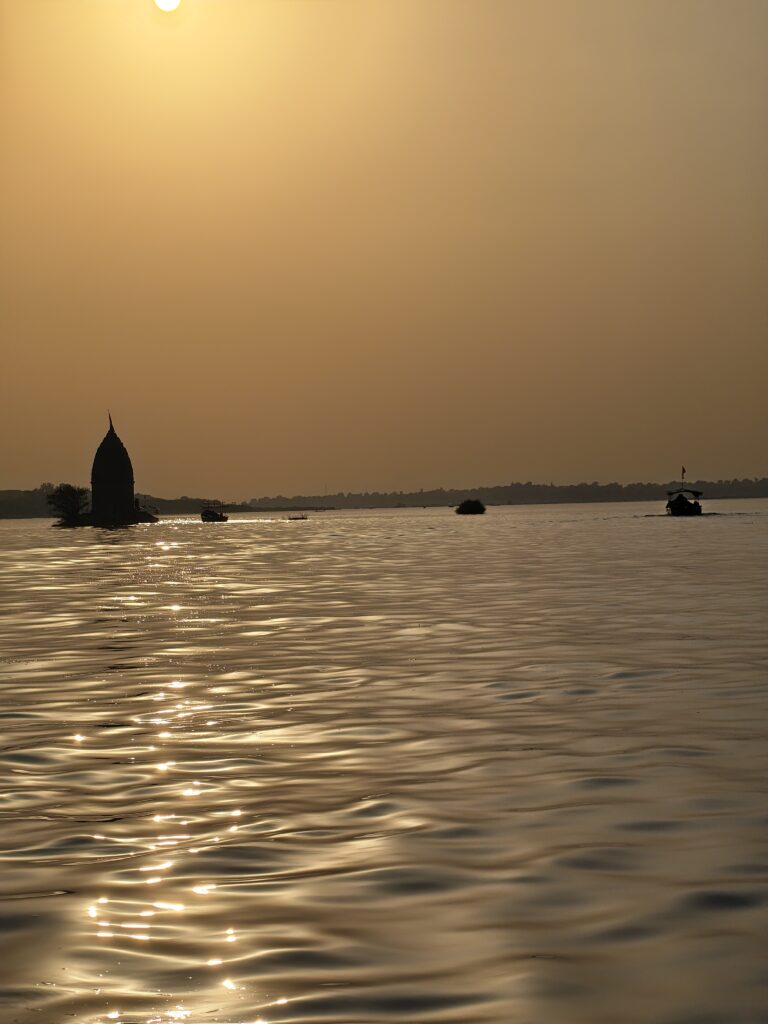
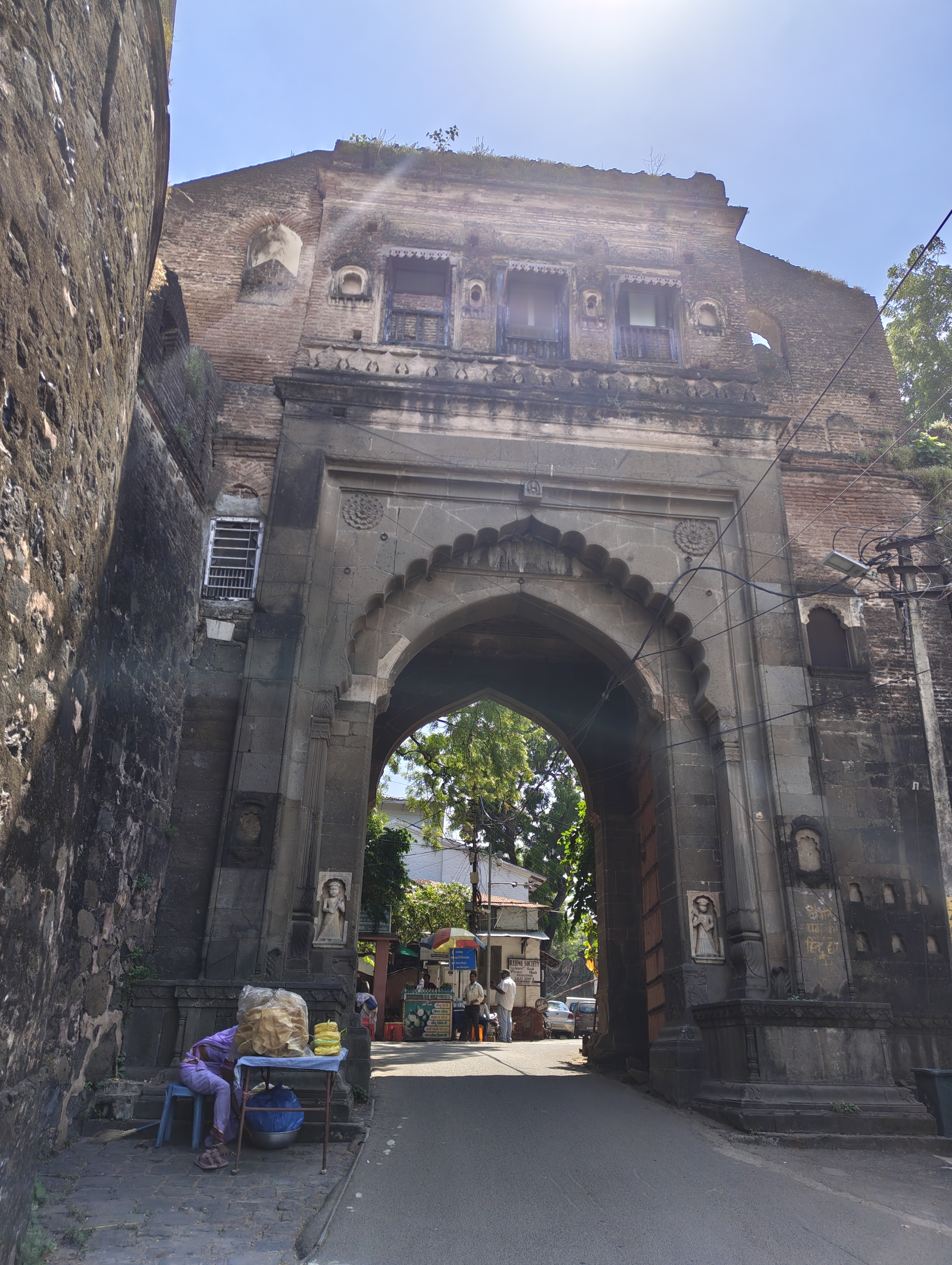
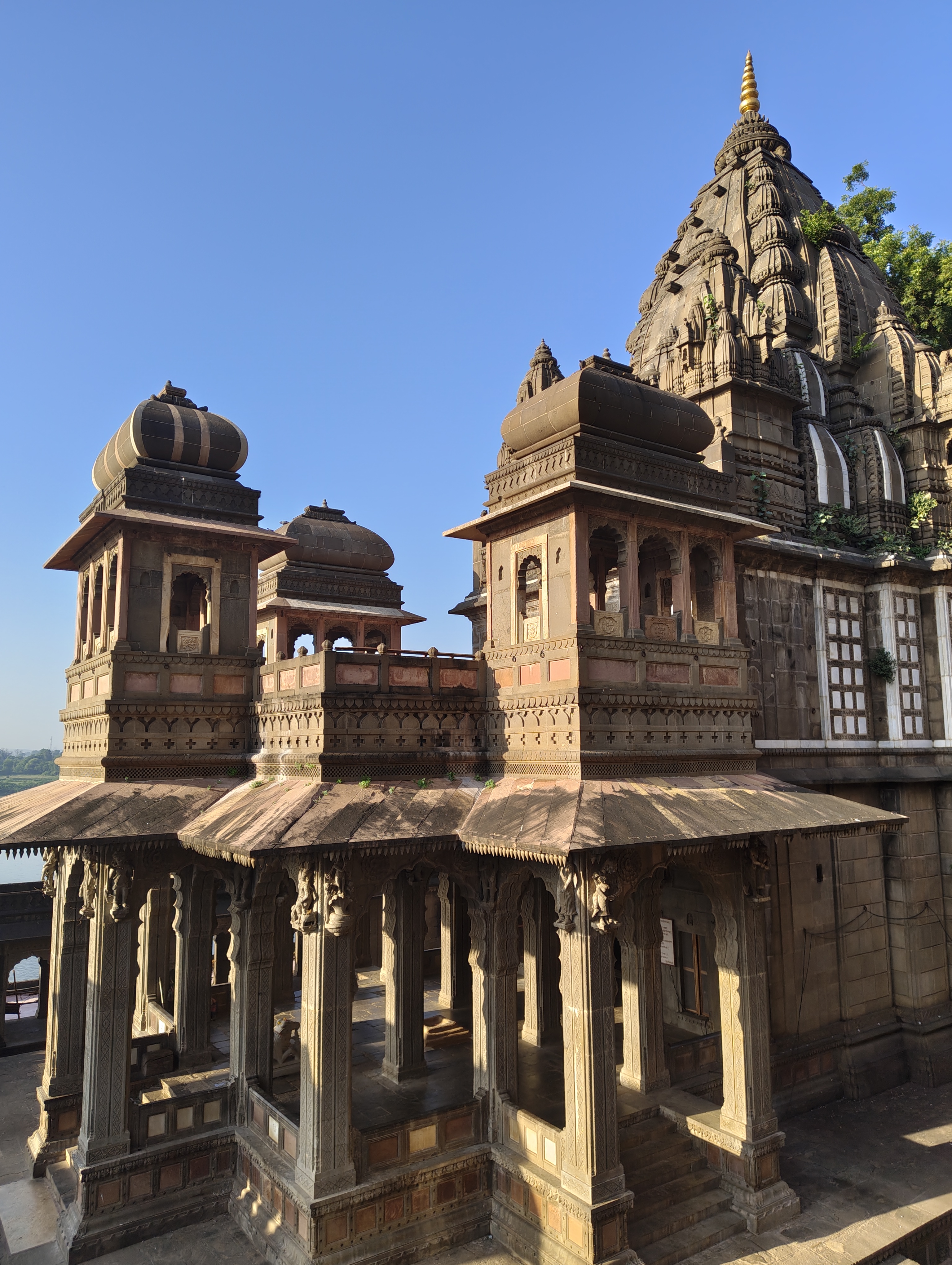
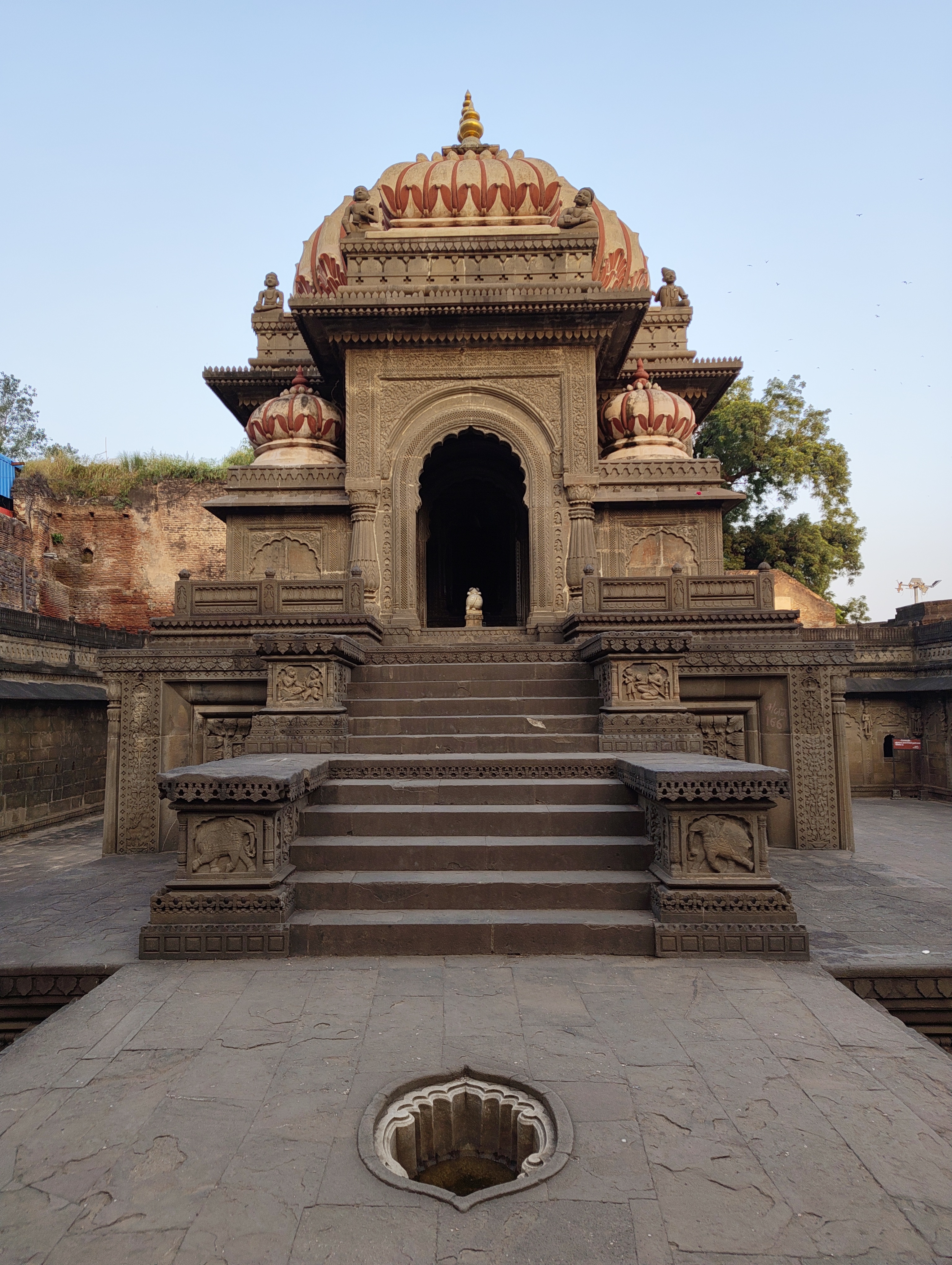
The Narmada rises in the Amarkantak Plateau and flows westward through a deep rift valley between the Vindhya and Satpura ranges before emptying into the Gulf of Khambhat in the Arabian Sea.
Geologically, she is ancient beyond easy comprehension. The valley itself was formed by tectonic rifting roughly 160 million years ago during the Mesozoic era, making the Narmada one of the oldest river systems in Indian subcontinent, far older than the Himalayas and the glacial rivers that later descended from them.
Her banks hold dinosaur fossils and Paleolithic stone tools, silent witnesses to a landscape that has remained a stable corridor of life for an almost unimaginable span of time.
In tradition she carries many names: Reva, the agile one; Amarja, born of the immortal; Rudrakanya, daughter of Shiva; Shankari. Among India’s sacred rivers she often stands in a place of unique reverence, sometimes held even higher than the Ganga. She is worshipped not merely as a river but as a living deity. The Narmada Purana is dedicated to her. The Mahabharata and the Ramayana speak of her as the ancient boundary between north and south. Kalidasa, in the fourth century, paused in the Meghaduta to praise her beauty.
Religious belief around the Narmada is intimate and absolute. Every stone in her bed is considered a form of Shiva. Where the Ganga is said to wash away sins through bathing, the mere sight of the Narmada is believed to purify. Some texts even say that when the Ganga becomes burdened with the sins of humanity, she comes to the Narmada to cleanse herself. The great Narmada Parikrama — the complete circumambulation of the river along both banks — remains one of the most profound pilgrimages in the country.
Her course is marked by a chain of sacred and historic places: Amarkantak at the source, Jabalpur with its Marble Rocks, Nemawar and the Nabhi Kund, the Jyotirlinga of Omkareshwar, Maheshwar, and finally Bharuch at the estuary. Between the dramatic walls of the Vindhyas and Satpuras, these sites feel both ancient and alive.
Maheshwar, where my own deeper noticing began, sits on the northern bank. In ancient texts it appears as Mahishmati or Gupt Kashi, the capital of the legendary Kartavirya Arjuna mentioned in both the Ramayana and the Mahabharata. Over the centuries it passed through the hands of the Mauryas, the Guptas, Harshavardhana, the Delhi Sultanate, the Mughals, and the Marathas.
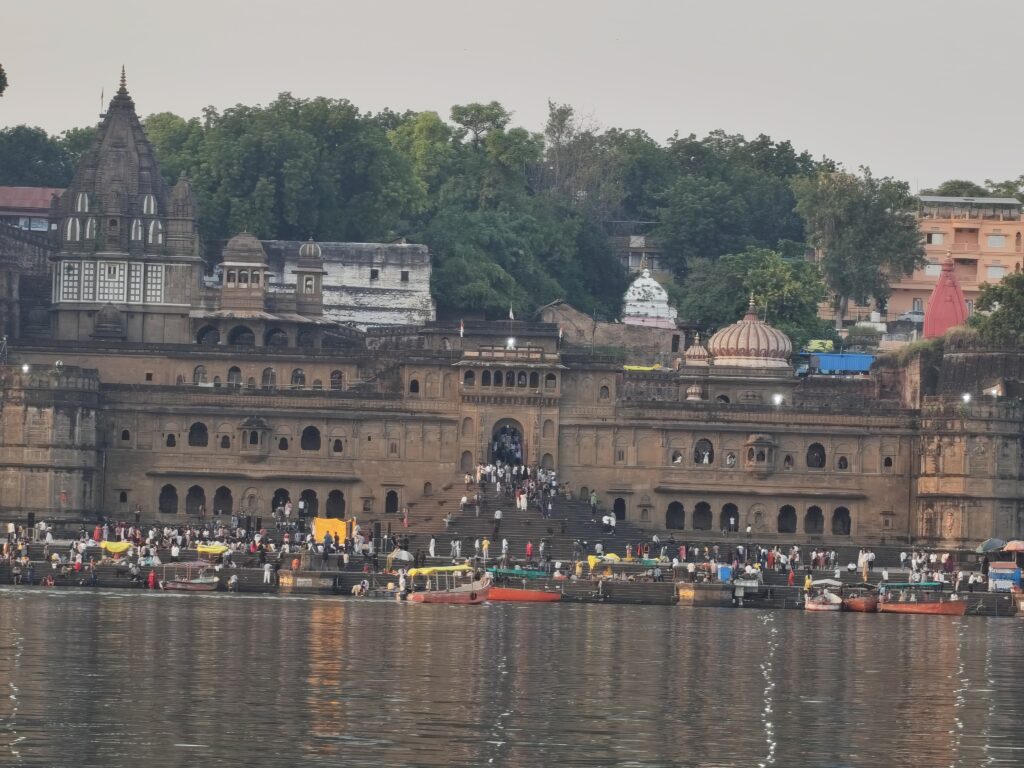
In 1767 it became the capital of the Malwa region under the Holkar queen Ahilyabai Holkar. She transformed the town with the grand Maheshwar Fort, numerous Shiva temples, administrative buildings, and the beautiful stone ghats that still line the river.
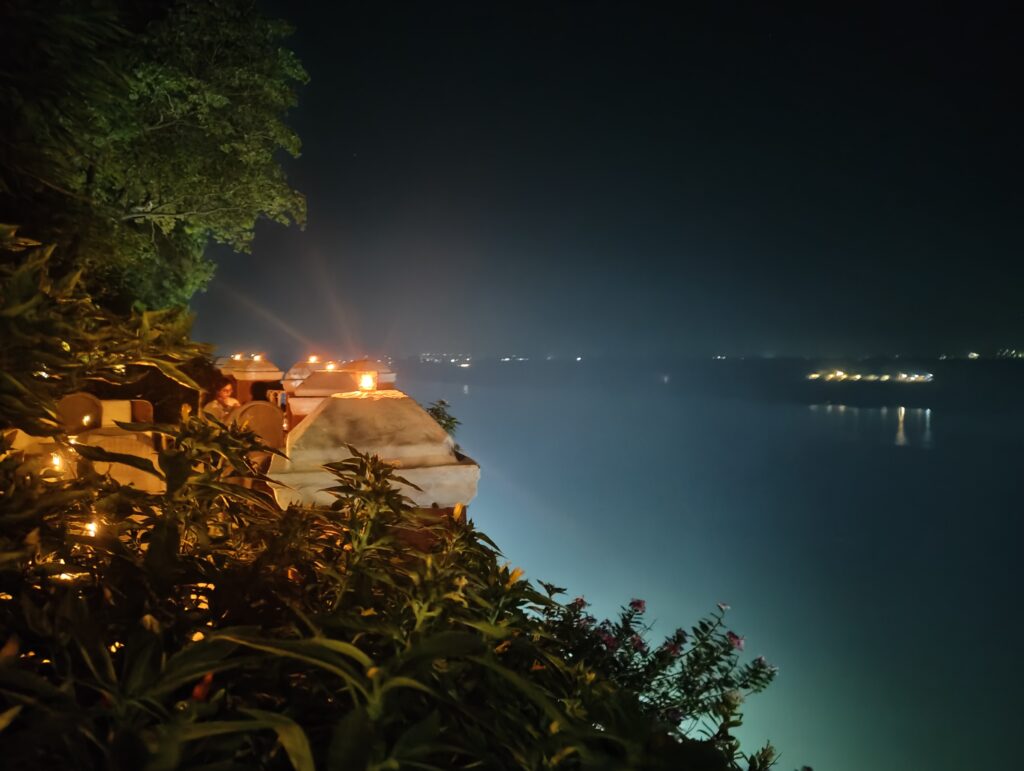
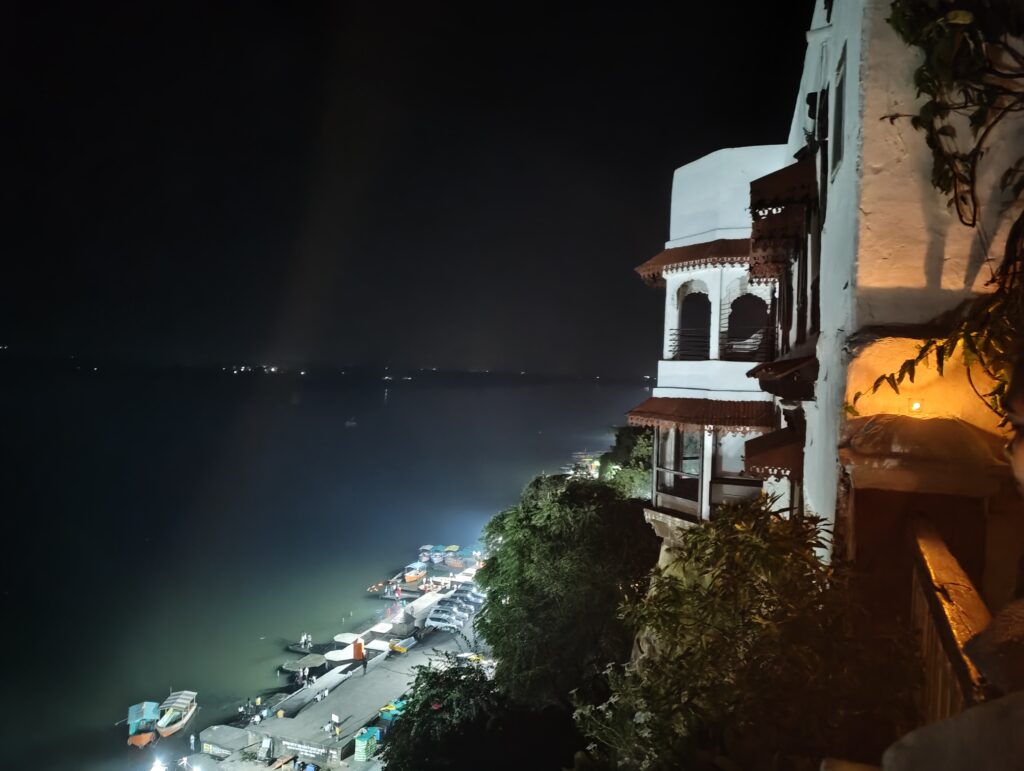
Standing there today, one feels the quiet continuity of a place that has been sacred and strategic for millennia. What made the visit even more special was that I went to Maheshwar on a holiday. There is something deeply romantic about the place — the wide, calm stretch of the Narmada, the soft light on the old stone ghats in the evenings, the quiet courtyards of the fort, and the way the river seems to slow down time.
Watching the lamps being lit at dusk, and simply sitting by the river as the sky changed colour made the whole town, river, ghats feel intimate and timeless. It was the perfect setting to fall a little more in love, with the river itself.
The Narmada is not just a river I grew up beside. She is an ancient geological memory, a living deity, a cultural axis, and a continuous thread of human history. Only recently have I begun to see her with the wonder she has always deserved.
Must Read: FLORAL DRAMA IN THE HIMALAYAS by Sandhyaa Venkatachalam