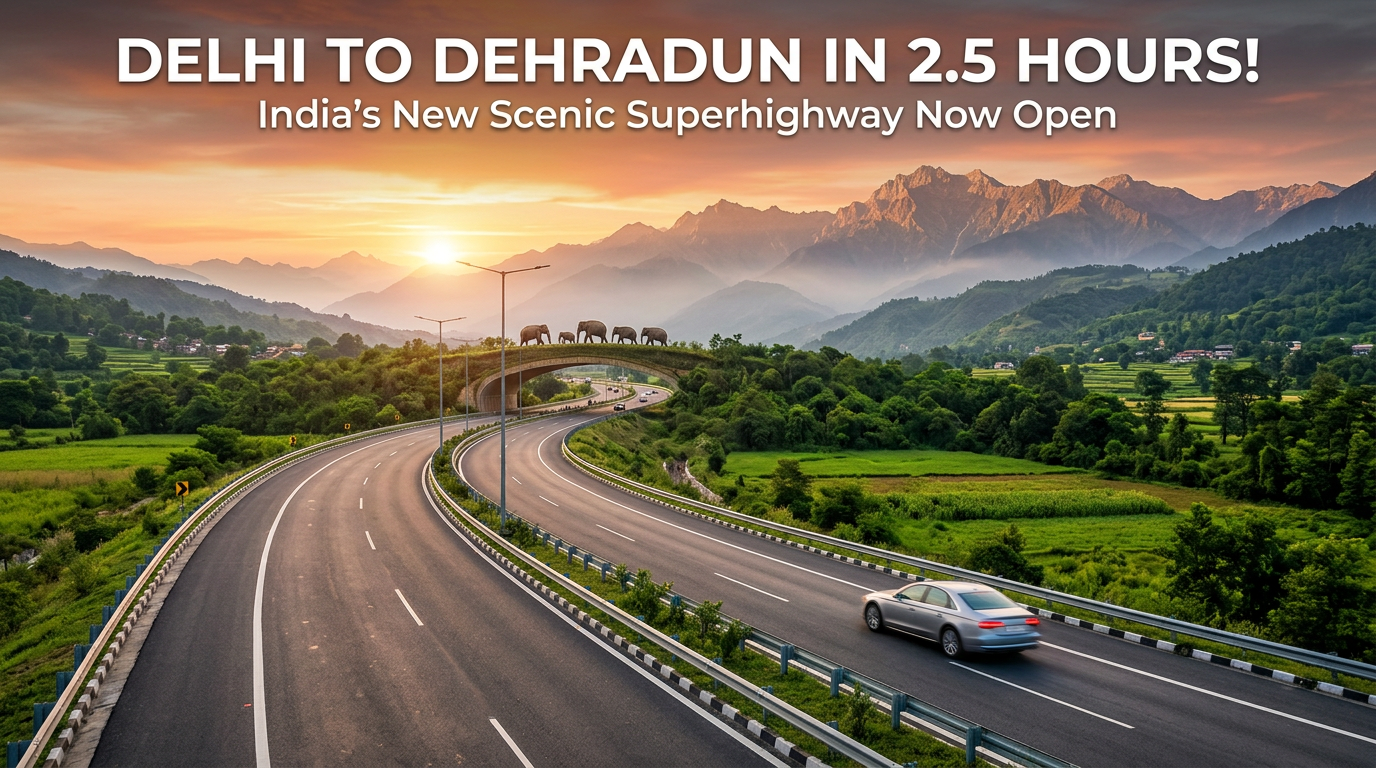

Prime Minister Narendra Modi inaugurated the Delhi-Dehradun Expressway on April 14, 2026, marking a major boost for travelers heading from the national capital to Uttarakhand’s scenic hills. This 210-km infrastructure marvel promises to slash the grueling 6-hour drive to just 2.5 hours, easing congestion and opening new doors for tourism and trade.
Project Overview
The Delhi–Saharanpur–Dehradun Expressway, also called the Delhi-Dehradun Economic Corridor, spans 210 km as a six-lane access-controlled highway expandable to eight lanes, built at a cost of around Rs 12,000 crore. Developed by the National Highways Authority of India (NHAI) in four phases blending greenfield and brownfield sections, construction kicked off in December 2021 after PM Modi laid the foundation stone. It integrates NH-709B, NH-307, and NH-344G, passing through Delhi, Baghpat, Baraut, Shamli, Saharanpur in Uttar Pradesh, and into Uttarakhand.
Detailed Route Breakdown
Starting near Akshardham Temple in Delhi, the expressway heads to the Eastern Peripheral Expressway (EPE) junction near Khekra (32 km, partly elevated). It then covers 118 km greenfield to Saharanpur east bypass via seven interchanges like Mandola Vihar, Khekra, Lohadda, Karaunda Mahajan (NH-709A link), and Halgoya (108 km milestone). From Saharanpur, a 40-km stretch reaches Ganeshpur at Rajaji National Park’s edge, followed by a challenging 19.5-km eco-sensitive section: a 2.32-km twin-tube tunnel, 4.82-km elevated flyover (6m clearance for wildlife), 2.12-km at-grade hill road, and a 340m single-tube tunnel near Daat Kali temple, ending in Dehradun.
Key Features and Infrastructure
This highway boasts 16 entry/exit points, five railway overbridges, 113 road underpasses, 76 km service roads, 29 km elevated sections, and 62 bus shelters. A standout is India’s second-longest 14-km elevated wildlife corridor over Rajaji National Park to protect elephants and leopards, following NH-44’s model. It links to the Delhi-Meerut Expressway, EPE, NH-344 (Ambala-Shamli spur), NH-58, and Char Dham Highway via a 50.7-km Saharanpur-Roorkee-Haridwar spur for pilgrims.
Entry and Exit Points
Strategic ramps ensure seamless access. Key ones include Akshardham and Geeta Colony (Delhi entries), Loni and Mandola (Ghaziabad/Baghpat), Shamli Road (Muzaffarnagar), Saharanpur Bypass, and Asharodi near Dehradun. A full table of Delhi-UP direction points:
Construction Phases and Contractors
-
Phase I: Akshardham to EPE/Delhi-UP border (Packages 1-2 by Gawar Construction, Ceigall India).
-
Phase II: EPE to Saharanpur bypass (Packages 1-4 by Raj Shyama, Krishna Constructions, Jandu-Shiv JV, Krishna).
-
Phase III: Saharanpur to Ganeshpur.
-
Phase IV: Ganeshpur to Dehradun (Vasishta Constructions for Package 1). Sections opened progressively from December 2025, hitting 98% completion by early 2026 despite minor delays like litigation near Akshardham.
Toll Charges and Costs
Five toll plazas mean cars pay about Rs 670-675 one-way from Delhi to Dehradun (exempt to EPE/Baghpat), with light vehicles at Rs 1,085 and buses/trucks up to Rs 2,275. Return trips within 24 hours exceed Rs 1,000, but time savings justify it for families or business travelers.
Recent News and Challenges
Fresh off inauguration, a 1,600 sq m house called ‘Swabhiman’ in Lonis Mandola village blocks one exit, delaying full operations slightly. Trial runs started in December 2025 on Delhi-Baghpat stretches, with new wayside amenities like parking and rest areas. A proposed 26-km Dehradun-Mussoorie elevated extension (Rs 6,100 crore) eyes further connectivity.
Impact on Travel and Tourism
For weekend warriors from Delhi-NCR or Mumbai pros eyeing Uttarakhand getaways, this cuts old 235-280 km NH-58 route’s snarls, boosting tourism to Dehradun, Haridwar, and Rishikesh. Logistics improve for Doon Valley industries, while eco-features set a green benchmark—perfect for motovloggers capturing smooth cruises through hills. Plan your trip: Check NHAI for live tolls and avoid peak hours post full rollout.