The first time I stepped off an overnight bus into Pune, it was six in the morning and the city was already awake. Not loud-awake like Mumbai, where the trains start screaming before sunrise — Pune wakes up the way a college student does, slowly, with a cup of adrak chai and a newspaper folded under one arm. There’s a saying locals use about their own city: “Pune la vel lagto” — Pune takes its time. And that, more than any fort or lake, is the thing I keep coming back for.
People land in Pune expecting an IT city with good weather and a Mumbai commute problem. What they find instead is a place with 350 years of Maratha history under its skin, a food scene that will humble you, and hills on every horizon that turn green the moment the monsoon touches them. If you’ve searched for places to visit in Pune, you’ve probably already seen a dozen listicles. This one’s different — it’s built from actual trips, actual traffic jams, and actual plates of misal pav. Here’s everything I’d tell a friend before they go, whether they’ve got one afternoon or a full week.
Best Places to Visit in Pune City
Shaniwar Wada is where you have to start, whether you’re a history person or not. This was the seat of the Peshwas, the prime ministers who effectively ran the Maratha Empire, and the fort itself burnt down in a mysterious fire in 1828, so what’s left is mostly the outer walls, the gates, and the foundations of what must have been an extraordinary palace. Walk in through Delhi Darwaza and you’ll see the teak doors still studded with iron spikes — meant to stop war elephants from battering them down. In the evening, there’s a light-and-sound show that narrates the Peshwa story, and honestly, sitting on those old stone steps as the sky turns orange behind the ramparts is worth the ticket alone.
A short auto ride away is Aga Khan Palace, and this one hits differently. Built in 1892 by Sultan Muhammed Shah Aga Khan III, largely as an act of charity to give famine-struck locals employment, the palace later became the site of Mahatma Gandhi and Kasturba Gandhi’s detention by the British after the Quit India movement. Kasturba Gandhi died here in 1944, and her samadhi sits quietly in the palace gardens. The building itself, with its Italian arches and manicured lawns, feels almost too serene for the weight of what happened inside it. I’d budget an unhurried hour here — this isn’t a place to rush through.
If you want the spiritual pulse of the city, climb Parvati Hill early morning. It’s not a big climb — a few hundred steps — but the Peshwa-era Devdeveshwar temple at the top and the view of the city spreading out below make it worth the sweat. Pune’s older residents still do this as a daily ritual, and you’ll see grandmothers overtaking you on the stairs without breaking a sweat.
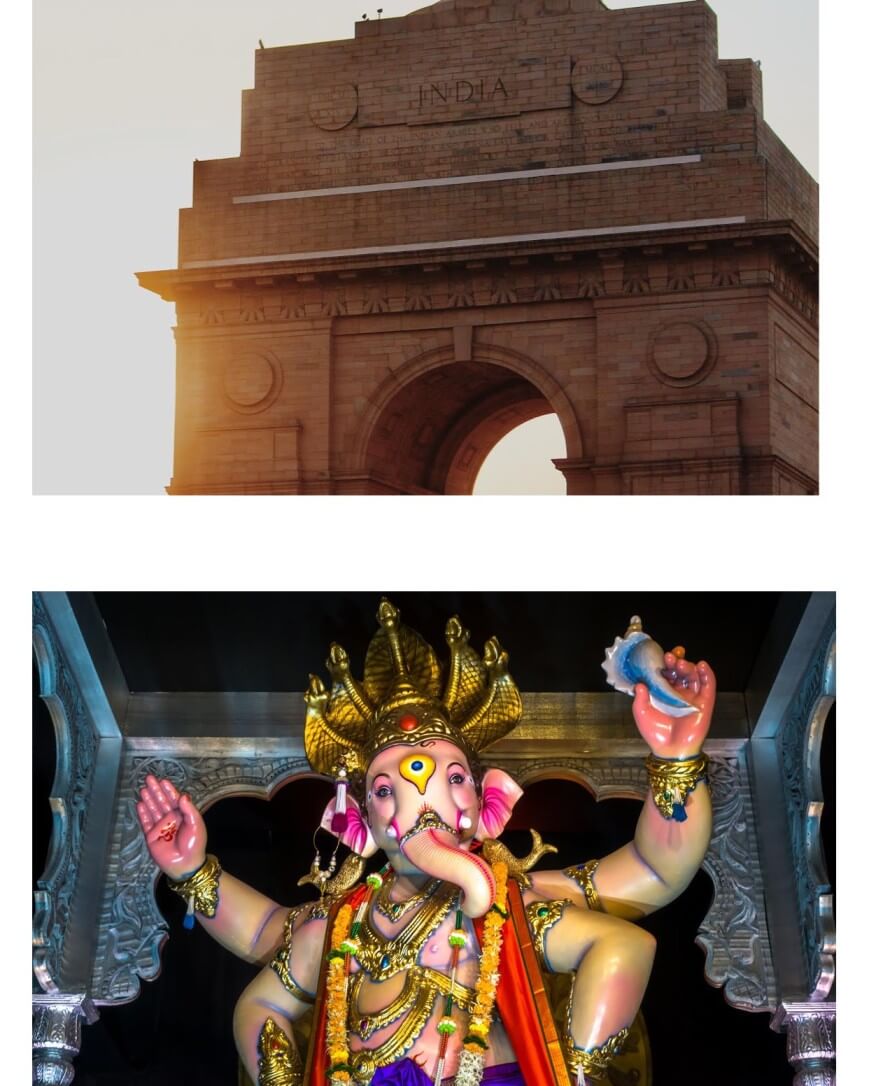
For something more theatrical, don’t skip the Dagdusheth Halwai Ganpati Temple near Shaniwar Wada. It’s a fairly modern temple, but the deity, the gold work, and the sheer devotion in the air — especially if you’re there during Ganesh Chaturthi, when Pune essentially becomes the unofficial capital of the festival — will stay with you.
Places to Visit in Pune in One Day: A Ready Itinerary
If you’ve only got one day in the city, this is the run I’d give a friend flying in for a work trip with an evening free. Start at Shaniwar Wada by 9 am, before the tour buses arrive — an hour is enough to walk the grounds and read up on the Peshwa era. From there, it’s a fifteen-minute auto ride to Aga Khan Palace; give it another hour. By late morning, head to Dagdusheth Halwai Ganpati Temple, which is walkable from the old city core, and grab lunch at one of the Bedekar-style misal joints nearby — you’ll need the fuel.
Post-lunch, drive up to Parvati Hill for the climb and the view, then swing by Pu La Deshpande Udyan (the Okayama Friendship Garden) for a slower, greener hour before the light starts to fade. If you’ve still got energy, end the day back at Shaniwar Wada for the evening light-and-sound show, or head to Koregaon Park for dinner and a Mastani. It’s a full day, but a doable one — and it covers almost everything a first-time visitor actually wants to see in the city itself.
The Quieter, Greener Pune
Not everything here is about forts and battles. Pu La Deshpande Udyan, which locals still call the Okayama Friendship Garden after its Japanese design roots, is where Punekars go for their evening walk, and it’s a genuinely lovely stretch of landscaped green with a small waterfall and koi ponds. And in Koregaon Park, the Osho Teerth Park, attached to the old Osho Ashram, is an unexpectedly peaceful stretch of forest trail right in the middle of the city’s trendiest neighbourhood — bamboo groves, a lotus pond, and enough quiet that you forget you’re a five-minute walk from Pune’s busiest café strip.
If old curiosities are your thing, the Raja Dinkar Kelkar Museum is a rabbit hole in the best sense — a private collection of over 20,000 everyday and artistic objects from across India, from carved doorways to musical instruments to nutcrackers shaped like tiny elephants. It’s the kind of museum where you go in for twenty minutes and come out ninety minutes later, slightly dazed.
Nearby Places to Visit in Pune: Tourist Places Near Pune Within 50 km
If your search was really for tourist places near me within 50 kms of Pune, or you just want a half-day escape without committing to a full expressway drive, this belt just outside the city limits is where I’d send you.
Sinhagad Fort, about 35 km from the city, is the one every Punekar has a college story about. It sits at over 4,300 feet, and it was here that Tanaji Malusare, Shivaji Maharaj’s trusted commander, led the legendary night assault to recapture the fort from the Mughals in 1670 — a battle he won but didn’t survive. There’s a memorial to him near the top. What I love about Sinhagad, beyond the history, is the ritual around it: bikers and trekkers climb up in the early hours, and everyone, without fail, ends the trip with a plate of hot pitla-bhakri or kanda bhaji and buttermilk at one of the small stalls near the summit.
Khadakwasla Dam, roughly 20 km out, is the easiest of the lot — a quick evening drive for the breeze, the view of the reservoir, and roadside corn-on-the-cob stalls. It’s less a destination and more a ritual for anyone who’s lived in Pune for a while. A little further along the same road, Panshet Dam adds boating and water sports to the mix, and Mulshi Lake, ringed by hills and dense greenery, is where I’d point anyone who wants calm water and a proper sunset without the crowds of Lonavala. All three sit comfortably within that 50 km radius and work well as a single half-day loop by car.
Places Near Pune to Visit: Weekend Escapes in the Hills
Pune’s real gift is what surrounds it a little further out. The Sahyadris rise up almost as soon as you leave the city limits, and during monsoon, this entire belt turns into something out of a different climate altogether — genuinely one of the best set of places near Pune to visit if you’ve got a full weekend.
Lonavala and Khandala, the twin hill towns about 65-70 km away, are the obvious first stop — waterfalls at Bhushi Dam, misty viewpoints like Tiger’s Point and Lion’s Point, and the 2,000-year-old rock-cut Karla Caves with their extraordinary Buddhist chaitya hall. Yes, it gets crowded on weekends, especially in July and August, but there’s a reason — the fog rolling over the valleys here is genuinely cinematic.
For something quieter, I’d point you toward Pawna Lake, where you can pitch a tent right on the water’s edge, light a bonfire, and wake up to hills reflected in still water. The lake is ringed by three forts — Lohagad, Visapur, and Tikona — and if you’re up for a moderate trek, Lohagad’s Vinchu Kata, a narrow rocky spur shaped like a scorpion’s tail, gives you one of the most dramatic viewpoints in the whole region.
History buffs with a slightly more adventurous streak should make time for the Bedse Caves near Kamshet — far fewer crowds than Karla, same extraordinary 1st-century BCE stonework, and a short uphill walk through quiet countryside to reach them. Kamshet itself has become something of a paragliding hub, if you’re chasing a different kind of view of these valleys altogether.
If your legs are up for it, the Andharban trail — the name literally means “dark forest” in Marathi — is a descending trek through dense, dripping Sahyadri forest that opens out near the Bhira backwaters. It’s monsoon trekking at its most atmospheric, though I’d only recommend it with a local guide, since the trail can get slippery and disorienting in heavy rain.
And when you want your hill station with strawberries and colonial nostalgia thrown in, Panchgani and Mahabaleshwar, about 100-120 km south, deliver exactly that — Table Land’s volcanic plateau, Parsi Point’s views over the Krishna Valley, and roadside stalls selling strawberries with cream that somehow taste better in the cold mountain air than they have any right to.
Must Read: Shree Mahabaleshwar Temple, Mahabaleshwar Satara: A Spiritual Oasis Amidst Nature’s Splendor
Eating Your Way Through Pune
I’ll be blunt — you haven’t understood Pune until you’ve eaten there properly. This is a city that treats food as a point of civic pride, and it starts with misal pav, a fiery curry of sprouted moth beans topped with farsan, onion, and a squeeze of lime, mopped up with soft pav. Every Punekar has a fierce, almost tribal loyalty to their preferred misal joint, whether that’s the old-school Bedekar Misal in Narayan Peth or one of the newer spots — don’t ask them to pick a “best” one, you’ll start an argument.
Then there’s puran poli, the sweet lentil-stuffed flatbread that shows up at festivals and family lunches alike, and bakarwadi, the spiral-rolled, spiced-and-fried snack that Chitale Bandhu has turned into practically an export industry — their Bajirao Road shop still gets queues that snake around the block. For something lighter, Pune does an excellent bhel and sabudana khichdi, and if you’re around during Ganesh Chaturthi, the modaks on offer across the city are on another level entirely.
No trip is complete without a Mastani — a decadent, over-the-top milkshake-meets-ice-cream concoction that Sujata Mastani near Deccan Gymkhana has been serving since the 1970s. It sounds excessive until you’re holding one on a hot Pune afternoon, and then it makes complete sense. And for something more European, the German Bakery in Koregaon Park (rebuilt after the 2010 blast that shook the neighbourhood) remains a quiet, leafy spot for a coffee and a slice of something sweet.
The People Who Make Pune What It Is
What sets Pune apart from most Indian cities its size is the sheer density of young people. This is a university town at its core — Fergusson College, Symbiosis, the University of Pune — and that gives the city an intellectual, slightly rebellious energy that sits oddly alongside its very traditional, very Maharashtrian core. You’ll find a 300-year-old Peshwa-era temple two streets away from a craft brewery. Old Pune, around Sadashiv Peth and Narayan Peth, moves at the unhurried pace of a small town. Koregaon Park and Kalyani Nagar move at the pace of a city trying to keep up with its own ambitions.
Punekars have a reputation across Maharashtra for being blunt to the point of rudeness, and it’s a running joke people here happily lean into. In my experience it’s less rudeness and more a total absence of small talk — ask a Punekar for directions and you’ll get precise, no-nonsense instructions and nothing more. Give them a reason to talk about food, cricket, or their city’s history, though, and that reserve disappears completely.
When to Go, and How to Get There
The Pune weather window is generous compared to most of India. October to February is the easiest, with cool mornings and warm afternoons, ideal for the fort treks and city walks. Monsoon — June to September — is when the Sahyadris around Lonavala, Pawna, and Andharban turn genuinely spectacular, though weekend traffic on the Mumbai-Pune Expressway can test your patience. Summers get properly hot, so if you’re visiting in April or May, keep your days short and your water bottle full.
Getting there is straightforward. Pune International Airport at Lohegaon connects to most major Indian cities. Pune Junction railway station is one of the best-connected in the country, with the Deccan Queen and Deccan Express being genuine institutions for the Mumbai-Pune commute. And if you’re driving in from Mumbai, the expressway takes you there in under three hours on a good day — though I’d still budget extra time, because the Ghat section rarely lets you off easy.
Pune doesn’t try particularly hard to impress you, and that’s exactly why it works. It hands you a fort, a plate of misal, a rain-soaked valley, and lets you figure out the rest. Give it three or four days and you’ll leave with a list of reasons to come back — I always do.